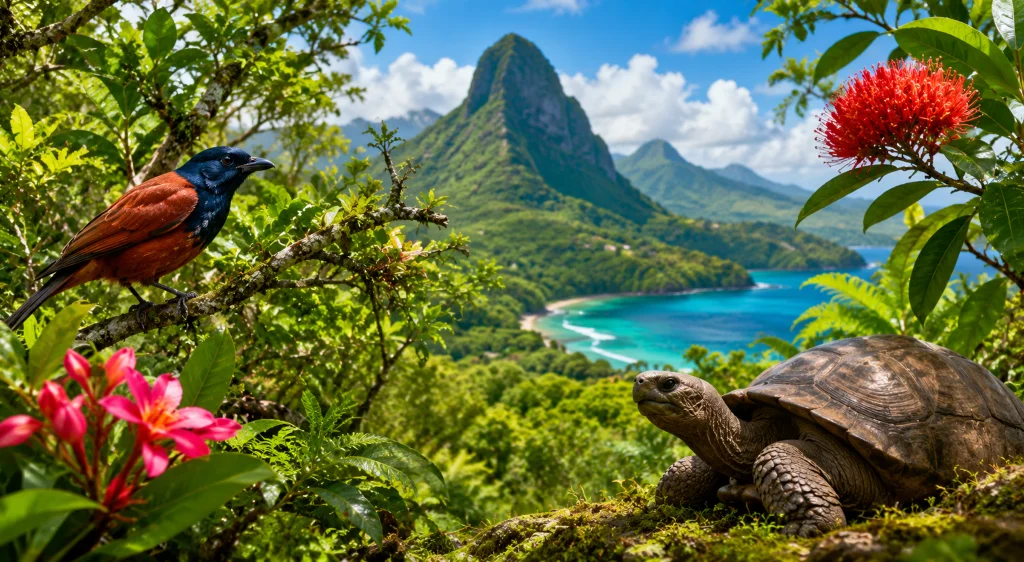
Mauritius is blessed with a diversity of flora and fauna not usually found in such a small area. This is because of its volcanic origin, age, isolation and its unique area.
670
Native Species
45%
Endemic
89
Orchid Species
The Mauritian
Ebony Tree
Mauritius has 670 native flowering species, of which around 45% are endemic to the island. Many endemic plants have become rare due to large scale habitat destruction.
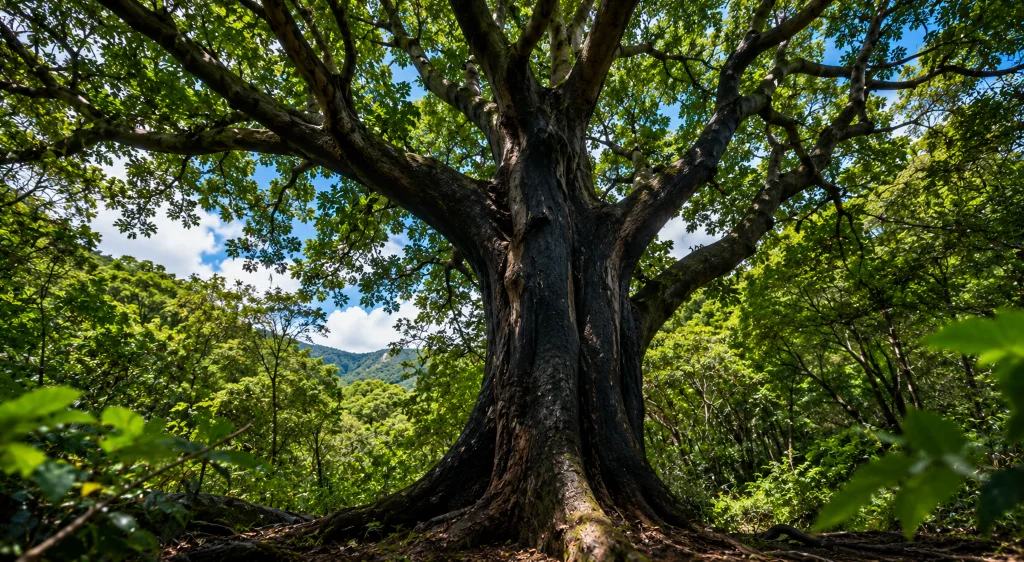
Examples of the impressive tropical hardwood trees that once covered a large area of the island can be found in Black River Gorges National Park and the Sir Seewoosagur Ramgoolam Botanical Garden.
The famous one is the Mauritian Ebony tree (Diospyros tesselaria) a striking dark wood tree and one of the island’s most iconic endemic species.
Trochetia Boutoniana
National Flower
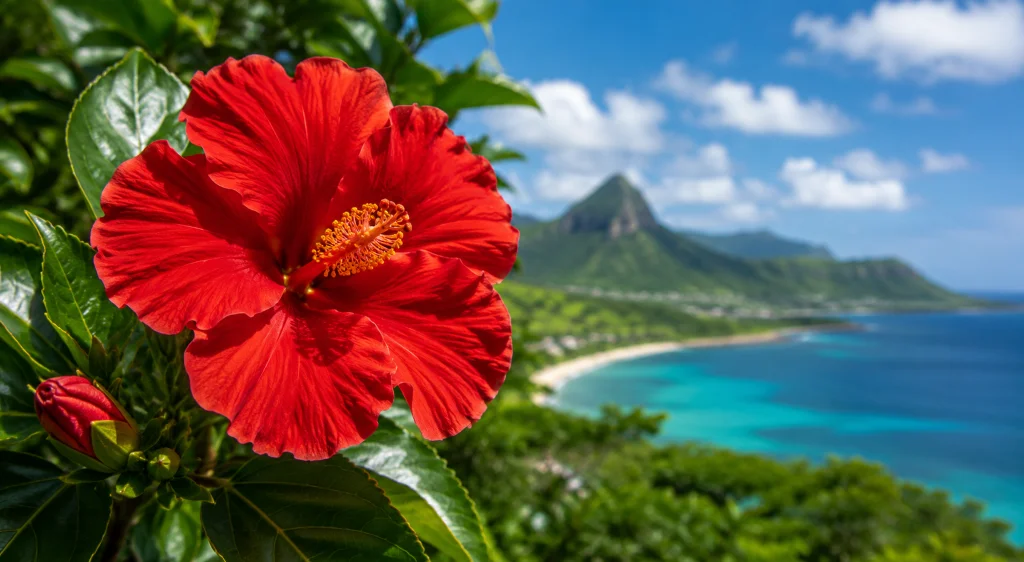
The Trochetia Boutoniana (Hibicus) was designated as the National Flower on the 12th March 1992 when Mauritius became a Republic. It is a flower endemic to the island.
It can reach 2 to 3 metres in height bearing deep red flowers a stunning and rare bloom found only on the island of Mauritius.
Trochetia Boutoniana
Designated National Flower · 12 March 1992 · Endemic Species
2–3m
Height
1992
Designated
89 Species
of Orchids
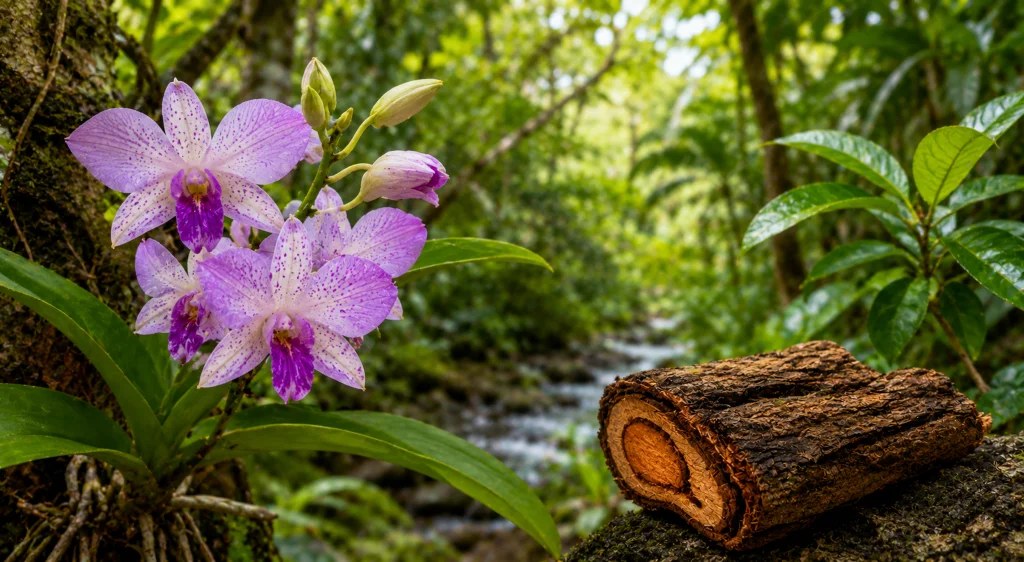
89 species of Orchids can be found in Mauritius. 9 out of these 89 species are endemic to the island. Due to their rarity, conservations are being made on Ile Aux Aigrettes.
There are also a number of plants with medicinal properties in Mauritius. The famous one is the ‘bois de rond’ whose bark is used to treat kidney stones.
89
Total Orchid Species
9
Endemic Species
Tropical
Fruits
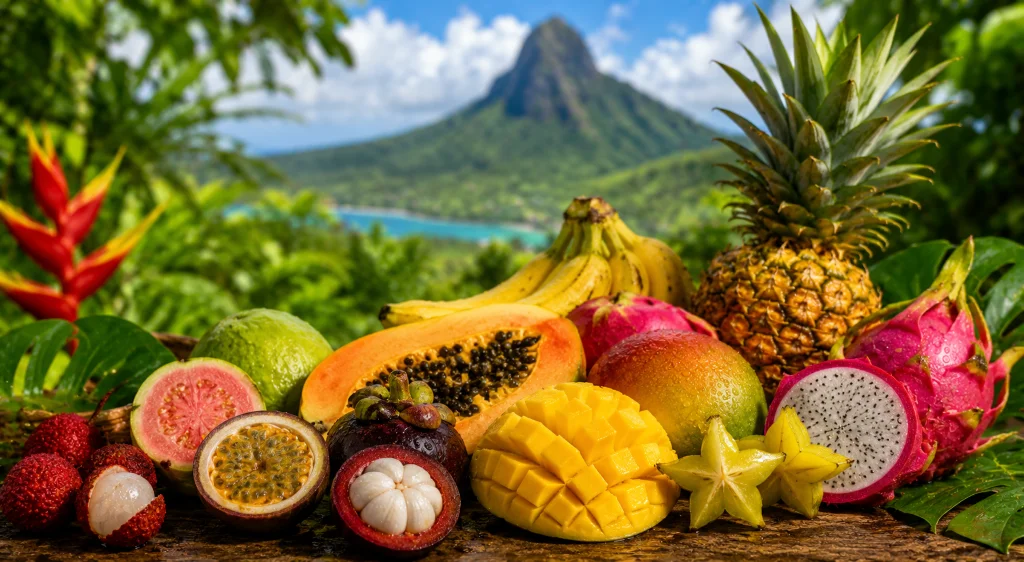
There is an abundance of tropical fruits available in Mauritius. They are produced for both local consumption and for export.
Being a volcanic island, Mauritius had limited colonisation coming from air and sea. A small number of animals managed to reach the island, including birds, reptiles and the fruit bat. Some species are still present in the deep forest areas and surrounding islets, away from predators.
Bananas
Papayas
Mangoes
Lychees
Watermelons
Coconuts
Île aux Aigrettes
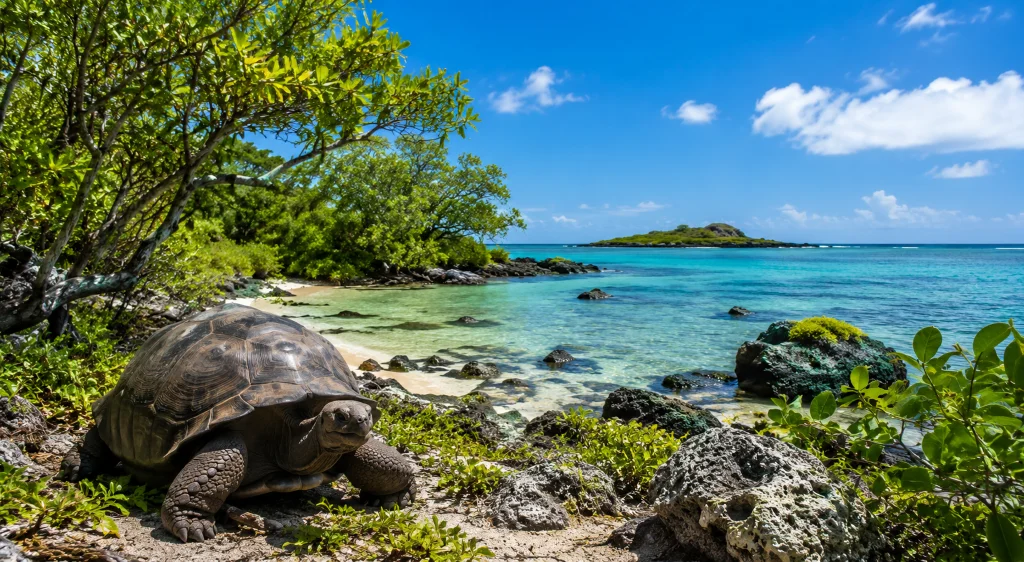
An islet found 1 km off the southeast coast of Mauritius. The Mauritius Wildlife Foundation is working towards the extensive rehabilitation of the ecosystem of the island, which has been greatly damaged for over 400 years.
Guided visits are now possible so as to discover some of the rare flora and fauna and to appreciate the conservation work in progress. It is the only place in the Mascarenes where the giant Aldabra tortoises roam freely.
Tours usually last for 2 hours and explanations are provided about the geology and history of the island.
1 km
From Coast
2 hrs
Tour Length
400+
Yrs to Restore
For the
Birdwatchers
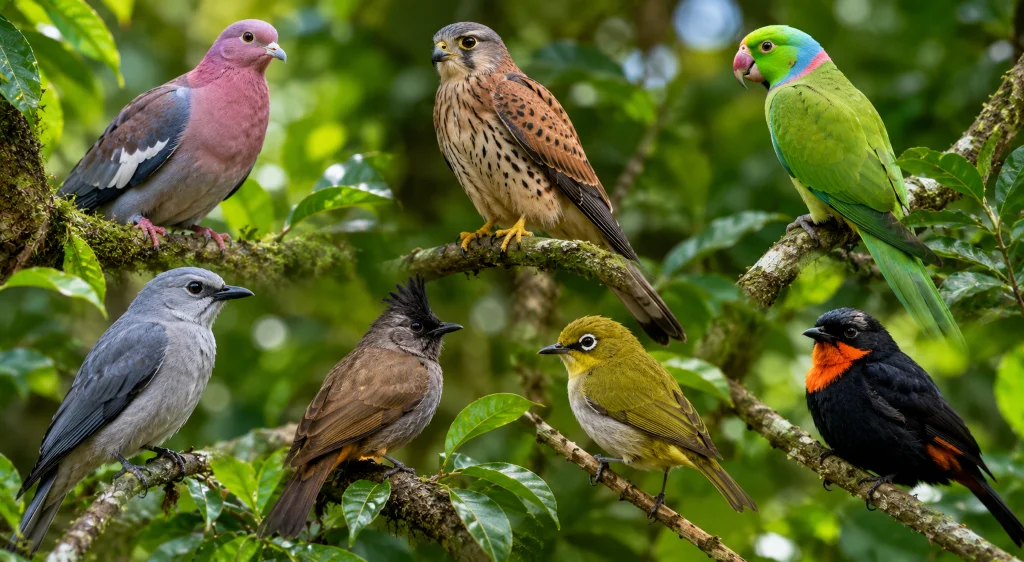
Birdwatchers who are visiting Mauritius will be spoiled. Despite the fact that only 9 endemic species of birds are remaining, some of them are the rarest birds in the world.
Pink Pigeon
Saved from extinction by a captive breeding programme. Once the world's rarest bird, now seen at Black River Gorges National Park and on Ile Aux Aigrettes.
Mauritian Kestrel
In 1973, there were only 4 individuals declared the world's rarest bird due to excessive pesticide use. Hundreds have since been bred in captivity and released.
Echo-Parakeet
Endemic to Mauritius with bright green feathers and a blue and pink collar. Saved from extinction through captive breeding.
These remaining endemic birds have suffered great losses caused by the introduction of predators raiding their nests.
Round Island
Reptile Refuge
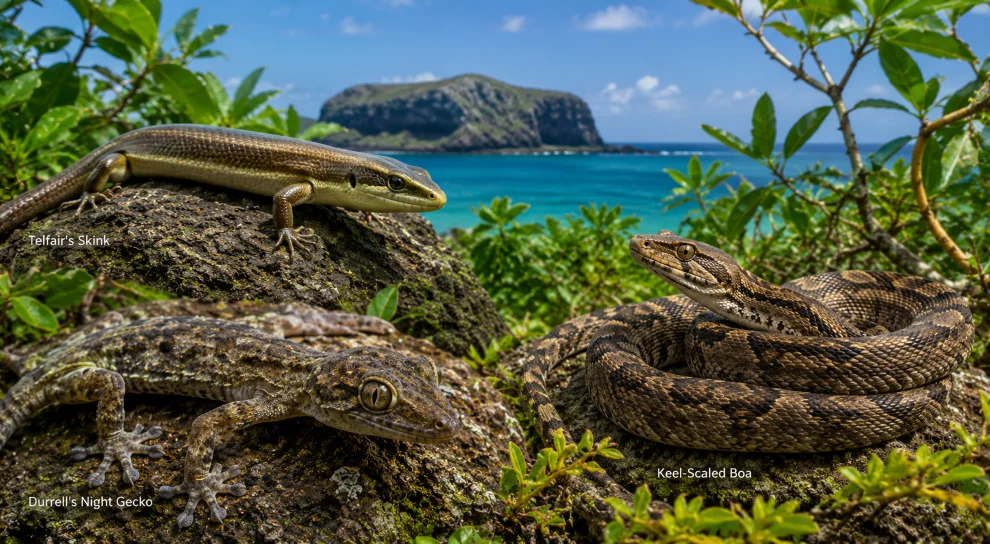
A number of fascinating and endangered reptiles exist on Round Island, found 22 km north of Mauritius. The island has remained uninhabited by man and rats, allowing reptiles, seabirds and plants that have disappeared elsewhere to survive.
Measures were taken to get rid of predators and the results have been spectacular. The increase in fruits and insects has brought about a significant increase in the population of reptiles.
Telfair’s Skink The large Telfair’s Skink is endemic to Round Island and endangered. Durrell’s Night Gecko The strangely Nocturnal Durrell’s Night Gecko is endemic to Round Island. Keel-Scaled Boa The remarkable Keel-Scaled Boa is endemic to Round Island and endangered.