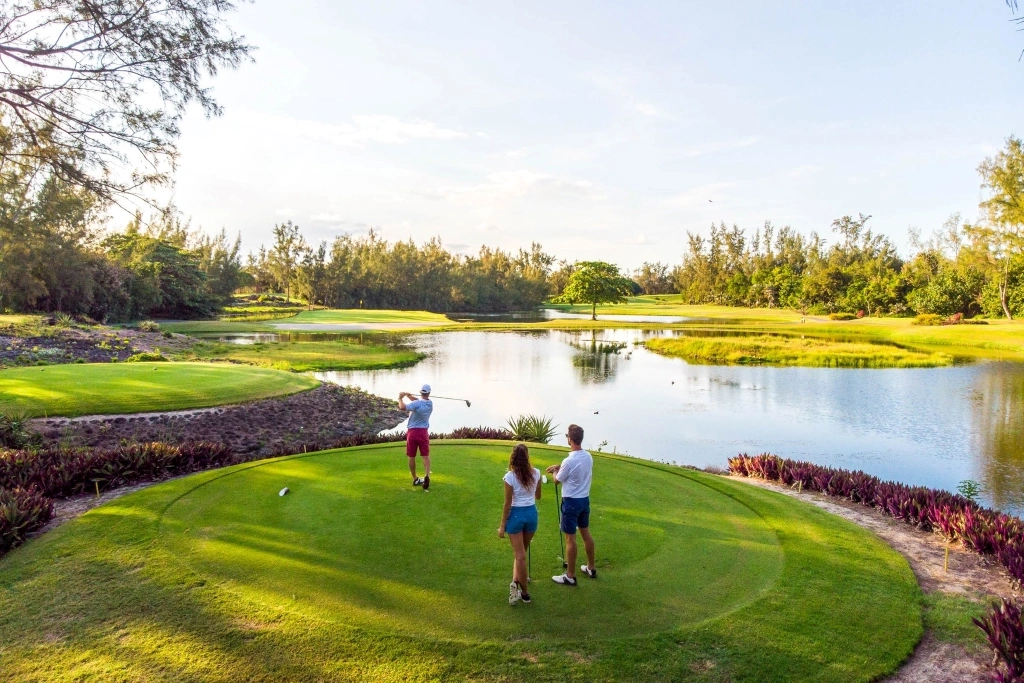
Referred to as the “Pearl of the Indian Ocean”, Mauritius is a tropical island with distinctive nature and wonders. It is also part of the Mascarene Islands, which is a triad comprising Reunion Island (French territory) and Rodrigues Island (Mauritius’ sister island). Deemed officially as the Republic of Mauritius, many offset islets and outer islands are under its
territories.
The exotic island is located about 800 km east from Madagascar Island and 2400 km from the southeastern coast of Africa. In retrospect, Mauritius emerged around 7 to 10 million years ago from an undersea volcanic eruption. Though dormant now, it still has remnants of its volcanic origin across the island’s geographical formations.
Considered as part of the African Continent, Mauritius is a famous destination for adventurers and honeymooners. Its prime location makes getting to the island quicker with direct flights from major cities across the globe like Paris, London, Dubai, Kuala Lumpur, Johannesburg, Mumbai,
Perth and others. It also has a modern port at the Port Louis harbour for cruise ships.
Mauritius, though tiny, is a developed country with a stable economy, major infrastructure,
modern healthcare, natural preserved ecology, intercultural coexistence, rich history and much
more.
Experience the diverse nuances of Mauritius!
One of the captivating facets of Mauritius, is the myriad of languages. Per se, the official language in the Mauritian Constitution is English for the parliament proceedings but French can also be used to address the presiding authority. Due to past British colonial administration, English is used in government / public administration, healthcare, education system, business world and courts. While in mass media like newspapers, TV, radio or magazines, French is more prominent.
The remnants of past colonizations have led to varied ethnic groups with their history and culture morphing the Mauritian society. It is common to hear locals interact in Bhojpuri, Cantonese, Urdu, Marathi, Hindi, Mandarin, Tamil, Malayalam or Telugu language. Though most locals converse in Mauritian Creole or French, still the other languages are inculcated in the education system and cultural centers across the island.
Mauritian Creole, commonly known as ‘Kreol Morisien’, is the most spoken language on the island. And, the easiest way to connect with the locals is to learn some local wordings and enrich your experience on the island.
Basic expressions to get by:
In summer, the maximum temperature can rise to 35 °C on the coastal regions while up to 28 °C on the Central Plateau. Sunrise is from 5 am to 5.45 am and sunset at 7 pm latest. The average sea water temperature is between 26 °C to 30 °C. The warmest months are December, January and February. January to March are also considered the wettest months due to the high temperatures and humidity.
While Mauritius does enjoy equatorial weather, the global impact of climate change has not left the island immune to its effects. Over the years unexpected heavy rainfall, low and high heat temperatures have been recorded throughout the island. So, sudden weather changes can occur.
In winter, the temperature varies during the day and night. On the coast, on a sunny day it can be up to 27 °C and at night it falls to 19°C. While on the Central Plateau, it can be 19°C during the day to 12°C at night. The days are also shorter with sunrise at 6.30 am and sunset around 6 pm latest. The average seawater temperature is between 22 °C to 25°C.
Undeniably, with such temperatures, Mauritius is a captivating destination with holiday vibes all year long with diverse activities tailored for each season and weather.